
Managing heart health is often about making smarter, more delicious choices in the kitchen. If you are looking for natural ways to support your cardiovascular system, looking down—into the soil—might be your best bet.
Root vegetables are nutrient-dense powerhouses packed with fiber, antioxidants, and essential minerals like potassium and magnesium, which are key players in the best vegetables for high blood pressure.
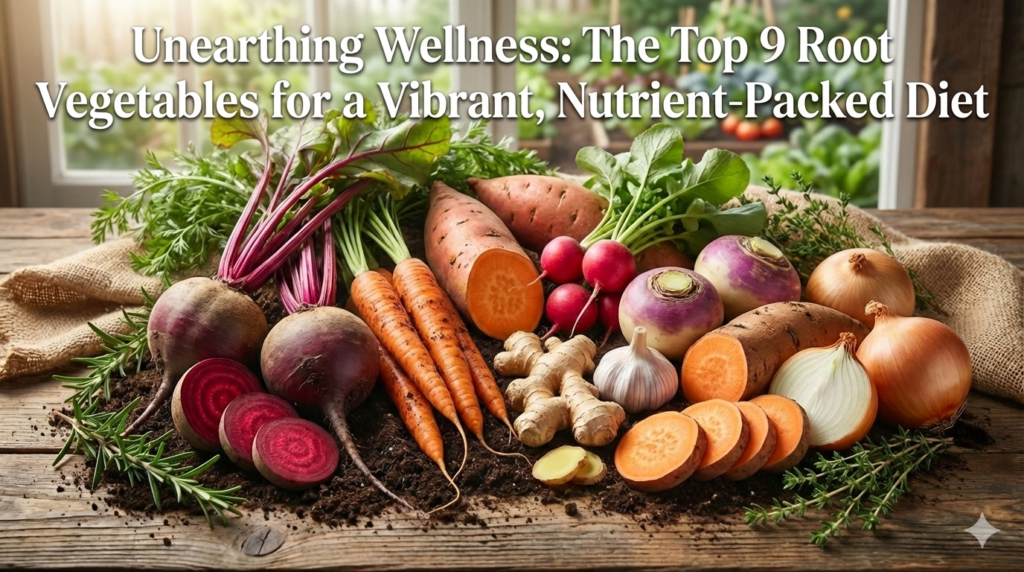
Below, we break down the nine specific root vegetables featured in the image above and explore why they are excellent additions to a heart-healthy diet.
Important Note: This article is for informational purposes only and does not constitute medical advice. Always consult with a healthcare professional before making significant changes to your diet, especially if you are on medication for hypertension.
Managing hypertension is a cornerstone of cardiovascular wellness. While medication is often necessary, the American Heart Association (AHA) emphasizes that dietary patterns—specifically those rich in potassium and low in sodium—are vital for blood pressure regulation.
Why Root Vegetables Support Heart Health
Before diving into the specific veggies, it helps to understand why these are considered some of the best vegetables for high blood pressure.
- Potassium Power: Many root vegetables are rich in potassium, a mineral that helps kidneys flush out sodium, easing tension in your blood vessel walls.
- Dietary Nitrates: Vegetables like beets contain nitrates, which the body converts into nitric oxide—a molecule that helps dilate (widen) blood vessels, improving blood flow.
- Fiber Rich: High-fiber diets are consistently linked to lower blood pressure levels and better overall heart health.
The Top 9 Root Vegetables for High Blood Pressure
Based on the visual guide, here is how each of these nine vegetables can contribute to a heart-smart lifestyle.
1. Beets (Beetroot)
Beets are often cited as one of the absolute best vegetables for high blood pressure due to their high nitrate content.
- The Benefit: Your body converts the dietary nitrates in beets into nitric oxide, which relaxes and widens blood vessels. Several studies suggest that drinking beet juice may help lower blood pressure levels temporarily.
- How to Eat Them: Roast them to bring out their sweetness or blend raw beets into a morning smoothie for a nutrient kick.
Citation: National Institutes of Health (NIH) – Beetroot Supplementation and Blood Pressure
2. Carrots
Carrots are more than just a crunchy snack; they are loaded with phenolic compounds.
- The Benefit: High in fiber and potassium, carrots help relax blood vessels. They also contain antioxidants like chlorogenic, p-coumaric, and caffeic acids, which help reduce inflammation—a key factor in heart health.
- How to Eat Them: Snack on them raw for maximum crunch, or steam them lightly to preserve their nutrients.
3. Sweet Potatoes
Sweet potatoes are a nutritional upgrade to the standard white potato.
- The Benefit: They are packed with potassium and magnesium. These two minerals work in tandem to help regulate blood pressure levels. Potassium helps eliminate excess sodium, while magnesium supports healthy blood flow.
- How to Eat Them: Bake them whole or slice them into wedges for healthy, homemade “fries.”
Citation: Harvard Health – Potassium and High Blood Pressure
4. Radishes
Don’t underestimate these small, peppery globes.
- The Benefit: Radishes are naturally high in antioxidants and minerals like potassium and calcium. They act as a natural diuretic, helping the body flush out toxins and excess fluids that can contribute to high blood pressure.
- How to Eat Them: Slice them thin for salads or roast them to mellow out their spicy bite.
5. Ginger
Ginger is a potent anti-inflammatory agent used in traditional medicine for centuries.
- The Benefit: Chemical compounds in ginger may help relax blood vessels and improve circulation. It is also a fantastic salt substitute—adding ginger gives food a burst of flavor without the sodium spike.
- How to Eat Them: Grate fresh ginger into stir-fries, soups, or steep it in hot water for a soothing tea.
Citation: Journal of Cardiovascular Pharmacology – Ginger Extract and Vascular Relaxation
6. Garlic
Garlic is perhaps the most famous dietary aid for the heart.
- The Benefit: Garlic contains allicin, a compound released when garlic is crushed or chopped. Allicin is widely studied for its ability to prevent angiotensin II production (a substance that tightens blood vessels), making garlic one of the best vegetables for high blood pressure support.
- How to Eat Them: For the most benefit, let chopped garlic sit for a few minutes before cooking to activate the allicin.
Citation: American Journal of Hypertension – Garlic as an Antihypertensive Agent
7. Turnips
Turnips are an undervalued root veggie that deserves a spot on your plate.
- The Benefit: Like radishes, turnips provide dietary nitrates and potassium. They are a low-calorie way to bulk up meals while adding heart-healthy nutrients.
- How to Eat Them: Mash them as a lower-carb alternative to potatoes or add them to stews.
8. Yams
True yams are starchy tubers that provide sustained energy.
- The Benefit: Rich in fiber and potassium, yams support digestive health and electrolyte balance. A healthy digestive system and balanced electrolytes are foundational for regulating blood pressure.
- How to Eat Them: Boil or bake them; they are excellent at absorbing the flavors of herbs and spices.
9. Onions
Onions are a staple ingredient that brings more than just flavor.
- The Benefit: Onions are rich in quercetin, a flavonoid antioxidant. Quercetin has been linked to lower blood pressure in some studies because of its ability to fight inflammation and relax blood vessel walls.
- How to Eat Them: Include them in essentially any savory dish—raw in salads or caramelized in sauces.
Conclusion
Incorporating the best vegetables for high blood pressure into your daily routine doesn’t have to be complicated. By focusing on these nine root vegetables—Beets, Carrots, Sweet Potatoes, Radishes, Ginger, Garlic, Turnips, Yams, and Onions—you are adding a variety of textures, flavors, and vital nutrients to your diet.
Remember, a heart-healthy diet focuses on variety. Try swapping out processed snacks for carrot sticks, or replace salt with garlic and ginger to flavor your meals. Small, consistent changes in the kitchen can lead to significant benefits for your long-term wellness.
Also read: 9 Easy Detox Soups to Gently Reset Your Body After the Holidays